Be yourself; Everyone else is already taken.
— Oscar Wilde.
This is the first post on my new blog. I’m just getting this new blog going, so stay tuned for more. Subscribe below to get notified when I post new updates.
Be yourself; Everyone else is already taken.
— Oscar Wilde.
This is the first post on my new blog. I’m just getting this new blog going, so stay tuned for more. Subscribe below to get notified when I post new updates.

JavaScript is the backbone of modern web applications. In the last couple of years, the world of UI development has evolved rapidly and JavaScript has become one of the most used programming languages till date. Let’s explore the power of this expressive language which helps us build the most beautiful user interfaces on web and mobile.
More and more complex applications are being developed using JavaScript these days. This doesn’t mean that every other language used for same purpose will slump overnight nor that JavaScript is free of issues; there are few issues but JavaScript has that power which makes it ubiquitous. Here are few reasons why JavaScript is a preferred language of front end developers.

JavaScript is absurdly liberal in what it allows. The idea may be to make it easier for programmers. At times, it makes finding problems in your programs harder as the system does not point them out to you. But, this flexibility also has its advantages. It leaves space for a lot of techniques that are not possible in more rigid languages. A single thing can be done in many different ways in JavaScript.
JavaScript is an expressive and powerful language which offers a lot of leeway to the users and there are plenty of new combinations to try and so you must experiment with them in order to hone your talents in JavaScript art. You will have free reign to unleash your creativity in JavaScript so that you come up with codes that solve problems and help people build more engaging applications.
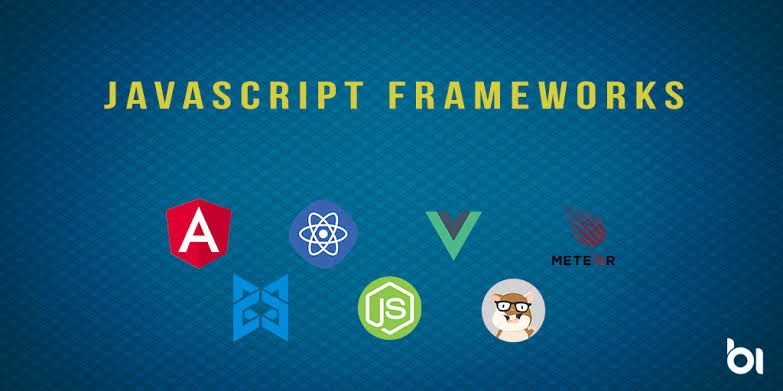
Another issue with JavaScript is, JS code tends to get out of hand after a short while. It’s mainly because lack of structure. Programmers need set of patterns/rules that can be followed to minimize the entropy of JavaScript code. There are numerous MVC frameworks out there which help developers to stay organized and write cleaner code. AngularJS, Backbone, Ember, knockoutJS are some of the popular frameworks.
JavaScript is widespread as it is supported by all browsers, but few factors like its ability to deliver rich, dynamic web content, its relatively lightweight and high ease of use, the supporting tool ecosystem, makes it the first choice of programmers today.
JavaScript has evolved to meet the changing needs of the industry. It is being adopted by many developers for a wide range of use-cases. It is one of the most versatile languages.
Nowadays JavaScript is everywhere; browsers, servers, devices. It is used for game development as well. When it comes to mobile solutions in the enterprise, the cloud is the important part. And here JavaScript’s role is fast becoming just as central.
Servers
JavaScript can be used beyond browsers, on the server side, to perform any sort of action. Earlier the only way to retrieve data or talk to back-end services was through languages like JSP, .Net, and PHP and sharing that data or service with others was a pain. Today, it is easy with a few lines of JavaScript and Node.js. Node.js, a software platform used to build scalable network applications based on Google’s V8 JavaScript engine.
Mobile
Mobile apps have a different set of expectations. Apps developed using web technologies also have user expectations like slick animations, fluid page transitions, snappy load times and instant visual feedback for user interactions, that is native performance. Native is often thought of as better than web, but it isn’t necessarily true. There are few problems with web apps but new web platform features are filling the holes. New JS APIs are coming that will allow web apps to reflect native capabilities.
Considering the dominance of JavaScript language it was necessary to make it better to accommodate all the platforms on which JS is running today, because it was not designed for the same. Next version ES6 is the future of JavaScript. It cleans up and evolves the language with lot of new features like class declarations, modules, promises, generators etc.
Most of the JavaScript environments, such as web browsers and Node.js, are actively working on implementing ES6. Tools like Traceur already allow us to write code in ES6 and then transpile it to ES5 so that it works in today’s browsers.
Given its feature set and popularity, ES6 is definitely going to revolutionise JavaScript development.
With so much forward momentum and rapid evolution, incredibly powerful JavaScript really is a platform for writing full applications.
MARCH 9, 2020|IN DESIGN, WEBSITE

Human beings have an incredible capacity for learning. However, there are times when one cannot do it on their own. That is why, according to the age-old, sound advice, when in doubt, seek professional help. In web development, the same goes. It does not matter whether you are an expert web developer or a novice; we can all use a bit of help and advice. Hence, we turn to experts. Here is our list of 2020’s best 10 blogs for web development.
Obviously, books and magazines are great information sources, but website development blogs provide you with the most up-to-date, freshest, not to mention free, content.
Blogs provide knowledge, links, and other information in different niches. However, like anything in life, the more choices you have, the easier it is to get overwhelmed and the harder it is to actually choose. With that in mind, we have compiled our favorite web development blogs.
Both amateur and seasoned web developers need to enhance their skills and knowledge. That is why it is very important to scour resource materials, especially the internet, to see what others are up to. Head over to one of these 10 best blogs for web development to learn and get inspired today!
This is an example post, originally published as part of Blogging University. Enroll in one of our ten programs, and start your blog right.
You’re going to publish a post today. Don’t worry about how your blog looks. Don’t worry if you haven’t given it a name yet, or you’re feeling overwhelmed. Just click the “New Post” button, and tell us why you’re here.
Why do this?
The post can be short or long, a personal intro to your life or a bloggy mission statement, a manifesto for the future or a simple outline of your the types of things you hope to publish.
To help you get started, here are a few questions:
You’re not locked into any of this; one of the wonderful things about blogs is how they constantly evolve as we learn, grow, and interact with one another — but it’s good to know where and why you started, and articulating your goals may just give you a few other post ideas.
Can’t think how to get started? Just write the first thing that pops into your head. Anne Lamott, author of a book on writing we love, says that you need to give yourself permission to write a “crappy first draft”. Anne makes a great point — just start writing, and worry about editing it later.
When you’re ready to publish, give your post three to five tags that describe your blog’s focus — writing, photography, fiction, parenting, food, cars, movies, sports, whatever. These tags will help others who care about your topics find you in the Reader. Make sure one of the tags is “zerotohero,” so other new bloggers can find you, too.

 Wal-eee's Blog